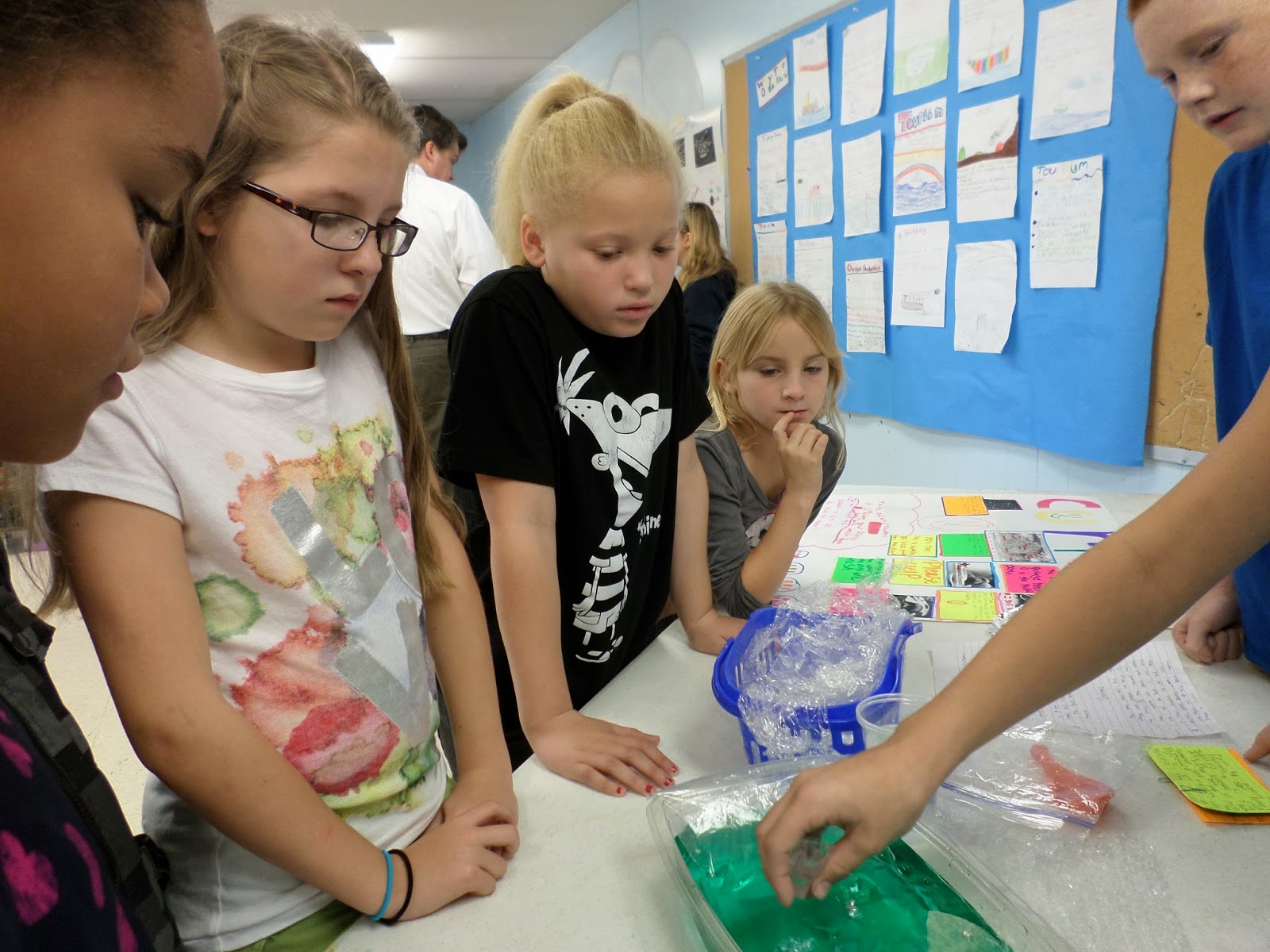
Today we had fun in science with static electricity experiments. Ask your student what he/she would have to do to end up with balloons on the ceiling!
Thursday, December 12, 2013
Monday, December 2, 2013
Pollution and the Chesapeake Bay
My apologies for the delay! On the 21st of November, Mrs. Kaufmann's class and our class gave presentations to several people who work in various positions at central office, including the director of elementary education and the science lead for the county. They were impressed!
Each group showed a demonstration about how pollution affects the Chesapeake Bay and offered a proposal for how we can help the environment/watershed here at school. The groups did a great job explaining their thinking and offering ideas for improvement here at the school. Ask your child how he/she did!
The light switch cover contest came to an end on Tuesday, November 26th. The group who held the contest will be reviewing entries (there were A LOT!) and we will have a winner soon! Stay tuned!
Each group showed a demonstration about how pollution affects the Chesapeake Bay and offered a proposal for how we can help the environment/watershed here at school. The groups did a great job explaining their thinking and offering ideas for improvement here at the school. Ask your child how he/she did!
| Learning about hot and cold currents from one of Mrs. Kaufmann's groups |
| One group's demonstration about soil and forest buffers |
| How pollution affects watersheds |
| Different polluting factors build on one another |
| Lots of different variables affect the Bay |
| One group held a school-wide contest to design new light switch covers |
| Here are a few early entries for the contest |
Wednesday, November 13, 2013
Frontier Museum
On Monday, we visited the Frontier Culture Museum in Staunton, Virginia. We spent the day outdoors, walking from exhibit to exhibit at the museum. The Frontier Museum tells the story of the thousands of people who migrated to Colonial America. The first pioneers came to American during the 1600s and 1700s from communities in England, Germany, Ireland, and West Africa.
To tell the story of these immigrants, the museum has moved examples of traditional rural builidings from Germany, England, Ireland, West Africa and America. The Old World exhibits show rural life and culture in the four homelands of early immigrants. The American exhibits show the life that the colonists and their descendants created in the early United States.
1700s Ireland
1700s Germany
To tell the story of these immigrants, the museum has moved examples of traditional rural builidings from Germany, England, Ireland, West Africa and America. The Old World exhibits show rural life and culture in the four homelands of early immigrants. The American exhibits show the life that the colonists and their descendants created in the early United States.
1700s Ireland
| Gathered around the fire listening about life in rural Ireland |
| Trying on wooden shoes that German children wore to gather firewood and do other outdoor chores |
| Straining milk for curds and whey |
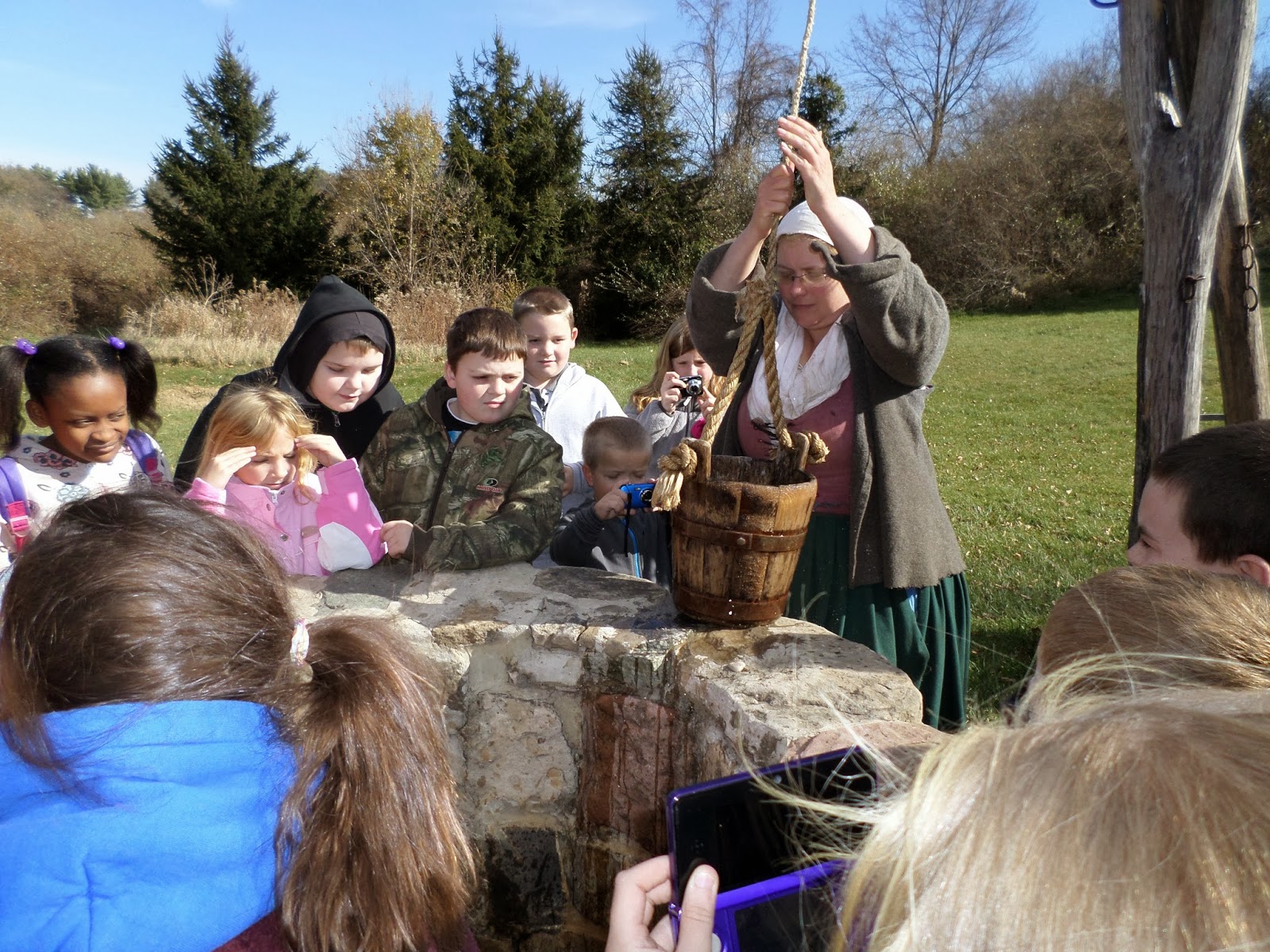
| Drawing water from a well |
| Not so sure about having to draw water from the well for every need |
1600s England
| 1600s English farm house |
| Fertilizing the garden with manure |
| Shoveling manure for the garden |
| The English farmhouse we saw was from an upper middle class family and had real glass! |
1700s West Africa
| Carrying baskets |
![]() |
| Entrance |
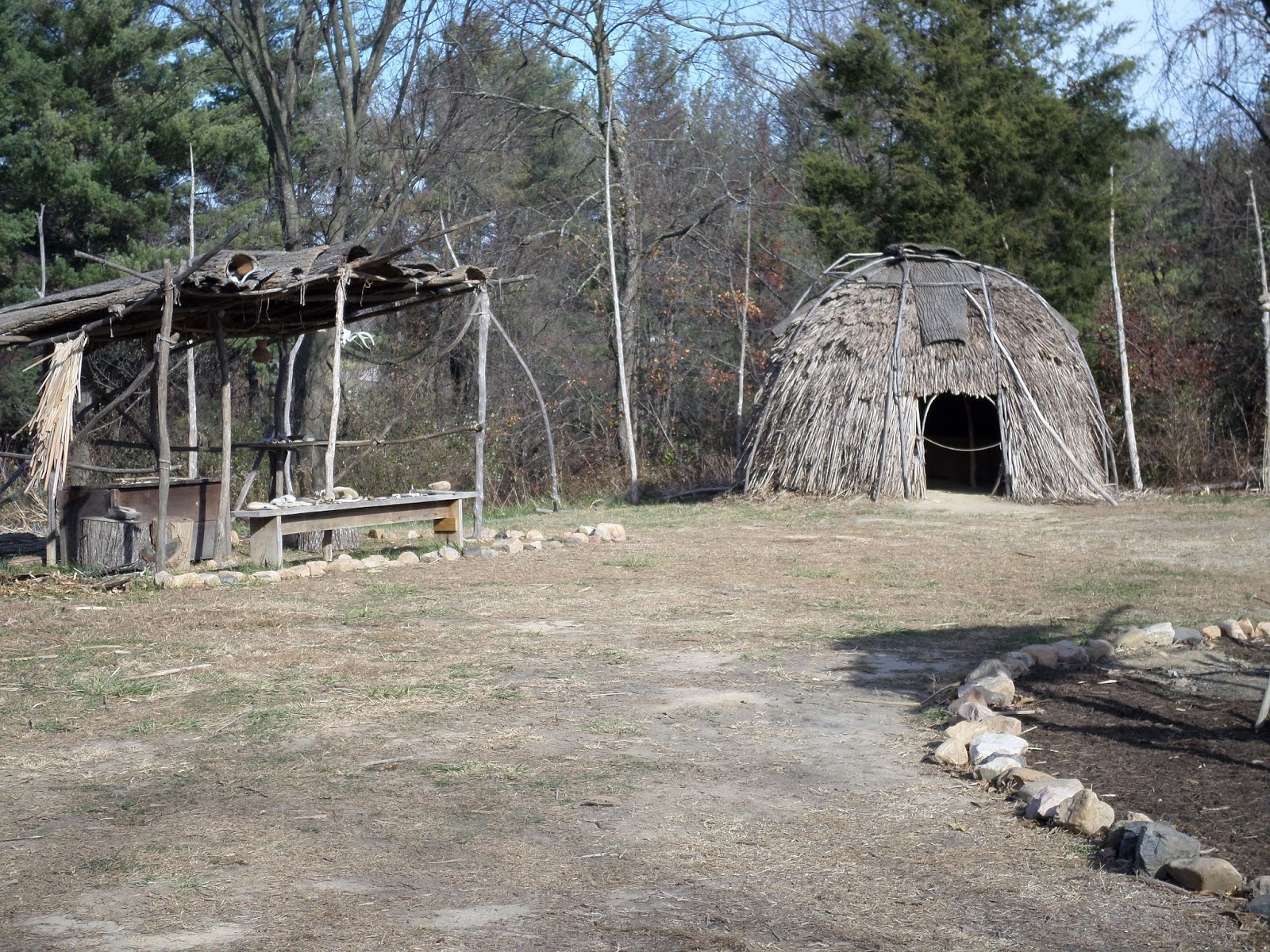
1700s Native American Encampment
| Hollowing out a tree trunk to have a canoe |
1740s American Settlement
| Early American "starter house". These houses were temporary and built to last until the settlers were able to tell if they would be able to survive by farming their new land. |
| Sawing logs to build a house |
1820s America
| Hearing about English, German, and Irish influences to American houses |
1850s American School House
| The boys writing on slates |
| The school teacher |
| The girls trying their hand at writing on slates |
We had a great time exploring the early beginnings of Virginia and the United States!
Monday, November 11, 2013
Ecosystems!
On Friday we started our new science unit, ecosystems and habitats. Here are a few great sites for building background.
Living Systems Matching Exercise
Habitats and Food Chain Exercise
Study Jams on Ecosystems
Habitats Quiz on Quia
Energy Pyramids
Food Chains versus Food Webs Exercise
Virtual Owl Pellets Dissection
Fun with Food Webs
Build a Food Web
Food Chains Game
Walk the Plank on Ecosystems
Name It! Living Systems
Life Cycles Practice
Living Systems Matching Exercise
Habitats and Food Chain Exercise
Study Jams on Ecosystems
Habitats Quiz on Quia
Energy Pyramids
Food Chains versus Food Webs Exercise
Virtual Owl Pellets Dissection
Fun with Food Webs
Build a Food Web
Food Chains Game
Walk the Plank on Ecosystems
Name It! Living Systems
Life Cycles Practice
Saturday, November 2, 2013
Halloween! & the End of the First Nine Weeks
A big thank you to Mrs. Brookman, Mrs. Lilly, and Mrs. Walker for coming in on Halloween. The class thoroughly enjoyed listening to a Halloween story and having delicious homemade cupcakes and juice!
Enjoy your gorgeous fall weekend and I will see you on conference day on Tuesday!
Tuesday, October 22, 2013
Guest Speakers
First, we had a speaker from the Virginia Department of Forestry come talk to us about the importance of forests in the protection of the Chesapeake Bay watershed. She did a demonstration about polluted water and showed how trees and vegetation near banks of rivers (and other water sources) can help reduce pollution.
To follow up with her talk, we made our own "polluted" water and built water filters out of various materials to see which ones would function best as filters.
Second, we had a speaker from the Hanover-Caroline Soil and Water Conservation District who talked more about our watershed address, watersheds in general, and the importance of soil as a natural resource. She did two demonstrations that really hit home the concept of a watershed.
| A demonstration to show the importance of vegetation in filtering pollution from water sources |
| Various pollutants on a small watershed model |
| Look at that polluted water! (upper middle in picture) |
Friday, October 4, 2013
Updated Pages
Please check out the Reading & Language Arts page for information on our word study program this year.
Updates on the Science, VA Studies, and Math pages coming soon!
Happy Friday!
Subscribe to:
Posts (Atom)